
Duck Hunt Gameplay
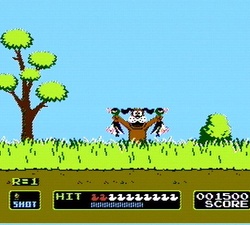
You lift the light gun to the glass, and the world narrows to wingbeats and the soft click of a trigger. "Duck Hunt"—aka that simple, almost meditative duck shoot—is all about rhythm. A duck bursts from the reeds, throws a cheeky arc, and you’ve got a heartbeat before the timer ticks down its escape past the edge of that blue sky. Three shots per release. No more. Three slim chances to catch the groove, steady the hand, don’t flinch, don’t fuss. Miss it—and there’s that familiar dog’s chuckle, and suddenly you feel the couch and carpet of childhood and that playful sting rolling back in.
The rhythm of the shot and the taut wait
No on-screen crosshair here—you aim with your body. The Zapper settles into your palm, and all your focus pours into the muzzle, into that fine duel with your own breathing. On a CRT the background flickers, scanlines shimmer, and weirdly, that helps: you start reading the path, leading the silhouette like you’re catching the music of its motion. The duck wobbles, feints to a side—you hold the bead on the horizon, count half a heartbeat, and press. Not a barked “fire!”—just a light, practiced click. And instantly you know: nailed it, or the dog’s about to pop up, empty paws and a laugh.
The timer here isn’t numbers—it’s in the air. When time runs thin, the bird feels wind-whipped: a dash, a zigzag, a sharp climb—and suddenly you’re in a reflex duel. Rush it and you’ll whiff. Wait it out and it’s gone. The best beats are when you lock in: two crisp shots in a row, then a breath; the dog already grinning with the catch as silhouettes flare below, filling the round’s bar. The streak’s alive, the score climbs, and that hunter’s calm settles in: you and the screen breathing in sync.
One duck, two ducks, and "clay shooting"
Three modes, three moods. In Game A it’s honest and intimate: one duck—one dance. You learn the tempo, the tells, and how to budget ammo. Game B turns up the chaos: two ducks split like kids at recess, and you have to decide right now. Shoot the closer one or hold for the cleaner angle on the second? Three shots for two targets—that’s where the risk-reward and micro-strategy bloom. Want a perfect string? Don’t rush, but don’t daydream. Feel how one flies with that “wobble,” while the other tracks straighter, almost like it’s gifting you a window for a clean lead.
Craving a different groove? Switch to clay shooting. No birds, just discs, and the whole scene becomes pure kinetics: a flash from the horizon, an arc skyward, a hard cut. No smug dog here—just the quiet satisfaction of a brisk, almost dance-like pace. Clay Shooting is where your hand finds the ideal swing, where three shells equal three tiny decisions at speed. Same mantra: don’t drop the rhythm, keep the line, trust your reflexes.
Speed ramps and the feel of "perfect"
Rounds accelerate, the backdrop shifts hues—denser sky, darker grass—like evening coming on. Ducks get bolder: chopping paths sharper, climbing more, as if they know your hit streak’s getting real. The game turns the screws politely: a quota of hits to advance, hidden scoring that favors quick shots and that “perfect round” where all ten targets are yours. The point is you feel it, not tally it. When a perfect lands, the dog strolls in with a broad grin and an armful of ducks, and somewhere under your ribs a quiet “yes!” pops—pure retro glee you don’t have to say out loud.
"Duck Hunt" also teaches patience. Dropping a streak isn’t failure; it’s a reset to breathing. Regrip the gun, give the wrist a shake, stare back into the CRT’s shimmer. Sometimes it pays to let one bird go so you can set up the other: save your shots, don’t splash them. That inner discipline grows on its own—after a dozen rounds you start catching the micro-pause between wingbeats, feeling the “soft” segment of a path. And then it clicks: the game has trained you. Your hand aims where the target will be half a second from now.
The Zapper, the dog, and CRT magic
Half the magic is the Zapper’s feel. No calibration, no menus, no fuss: pick it up, point at the CRT, fire. Your ear gets the gentle plastic click, your eye catches a barely-there flash on the target. Fair, simple, homey. And yes, the dog is a character. Its laugh isn’t cruelty; it’s that classic tease—the "Duck Hunt dog" you can spot by a single pixel. It’s a wordless ref: it beams when you clear a round, shrugs when you biff it. With the mutt around, the game isn’t punishment—it’s friendly banter: stand up, exhale, go again.
And so, loop after loop. "Duck Hunt" on the NES—call it duck shooting or that cozy “hunt” you played on a Dendy-style Famiclone—holds because of its timing. Little duels on every screen: you, a timer, three shells, and a slab of sky above the reeds. The farther you go, the more nuance you read: when to wait and when to snap; when accuracy beats speed and when it’s the other way around. In that simplicity lies a rare honesty: the game doesn’t hide the rules; it wants you to live them with your whole body. Raise the gun, keep the front sight true, trust your ears and muscle memory. And the dog… let it laugh—it’s there so your next streak lands even cleaner.