
Duck Hunt story
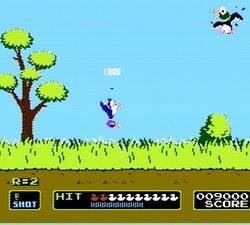
People remember it with a flick of the wrist: the gray‑and‑orange pistol, the green field, the lake, and that cackling dog. Duck Hunt isn’t just “shooting ducks” to us—it’s the Duck Hunt. In those words you can almost hear the soft buzz of a CRT, feel the living‑room warmth, and that jolt when wings flash across the screen. How the NES Zapper actually works—and why a shot at the “TV” makes feathers fly—is over in /gameplay/. Here, let’s unpack how this simple, brilliant idea was born, and why it spread faster than the first startled duck.
From shooting gallery to couch
Duck Hunt’s roots go back to Nintendo’s pre‑videogame era, when the company adored physical toys and clever optical tricks. Long before a home console, they ran light‑beam galleries with film silhouettes flickering across a screen—the ancestor of future light guns. That know‑how flowed right into the 8‑bit age. When the Famicom launched in Japan, Nintendo’s teams had one mission: bring the feel of a real gallery into a carpeted living room. Enter the light gun—the soon‑to‑be darling of family nights. Its American name, the NES Zapper, quickly turned generic, and in 1984 Duck Hunt landed on cartridges like it was made for the TV at home: no overthinking, just reflex, just unfiltered excitement.
The secret of its appeal is simple: a team raised on old attractions gave players a clear goal and instant feedback. Hit—and the dog giggles. Miss—and you get that smug smirk. There’s barely any music, but every beep and pop is placed with love: minimalism with an 8‑bit maestro’s touch. While Wild Gunman and Hogan’s Alley marched across Nintendo’s lineup, Duck Hunt became the go‑to “family gallery,” the one you kept returning to. That era of attractions and early living‑room leaps is a whole shelf of memory—we revisit it in /history/.
How it became everyone’s game
In the U.S. and Europe, an unlikely combo did the trick: the Super Mario Bros./Duck Hunt cartridge came packed right in with the Nintendo Entertainment System. Whether you meant to beat Mario didn’t matter—the Zapper was already there, and your hand drifted toward a quick “hunt.” That pack‑in did its job: duck shooting settled in millions of homes without a sales pitch. From there it lived its own life. Some families called it Duck Hunt, others just “the duck game,” but the rituals were the same: press the barrel closer to the glass, squint, argue over who can drop two birds in a row.
Across Eastern Europe and beyond, it took a different path—through Dendy Famiclones and multicarts with loud promises like “9999 in 1.” The box often hid that little light‑gun, and half the neighborhood recognized the click first. Some were bright orange, others “metallic,” but the trigger snap felt equally sweet. Evenings ran on squabbles and teasing: “Don’t yank the cable!” “The dog’s laughing again!” On controller two, some rascal swore they could guide a duck to the edge—one of those tiny urban legends argued over like a world final. And somewhere nearby people chatted about arcade Vs. Duck Hunt—tougher dogs, harsher penalties. That’s how folklore forms: scraps of fact stirred with childlike awe.
And yes, the dog. A meme before “meme” was a thing. That chuckle is the hook that makes you queue up one more round. Some swore they had a way to “put that mutt in his place,” others insisted there was “a version” where you could shoot him—legends gonna legend. The magic is you don’t need a lecture: you miss, and the screen almost winks. The game feels alive because the toy answers with emotion, not just points.
More, and then some
Duck Hunt’s success kicked off a wave of living‑room galleries. Other light‑gun games kept popping up under different names, but among friends you’d usually say the same thing: “Let’s play something like Duck Hunt.” Brochures bragged about an “8‑bit classic,” but there was no pretense: hear a duck burst from the grass once and you get it. It doesn’t age because it’s about something warm and human—friendly rivalry, living‑room rituals, little everyday holidays. Someone would pull the Super Mario Bros./Duck Hunt cart “just for five minutes” and get lost till midnight. Someone else would tap the Zapper’s barrel and patiently wait their turn. In those snapshots lives that folk love, the reason Duck Hunt in our chats becomes either “the duck game” or simply Duck Hunt—because that’s how we remember it.
Over the years it’s been reinvented in chatter, jokes, and fan art, but the feeling never changed: a kind‑hearted gallery at home—maybe the homiest of them all. While some argue about what matters more—the arcade DNA or the iconic Zapper—we know the headline: you raise the “gun,” the screen flashes, the dog readies a laugh, and your heart beats a little faster. That’s why it exists—so any city, any couch can host a fresh little duck hunt whenever you like.