
Duck Hunt Walkthrought
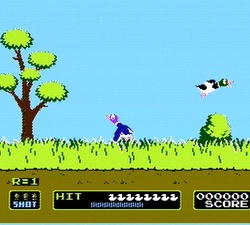
Duck Hunt — yes, that Duck Hunt on the NES where the dog pops out of the grass and laughs — is beaten less by raw reflex and more by sequence. Don’t spray; plan the round. Below is how to keep a steady streak in every mode: when it’s one duck, when two launch at once, and in Clay Shooting. Need a quick refresher on the Zapper light gun and its quirks? Hop into gameplay, and we’ll go round by round.
Prep and round thresholds
Before you start, remember the simple rule: each round shows a hit meter — how many targets you’ve dropped and the threshold to advance. Your job isn’t to land a hero shot every trigger pull, but to meet the quota consistently. Once the threshold’s secured, don’t burn bullets on tricky edge runs near the screen border. Keep your rhythm instead of earning the dog’s laugh and a reset.
Ducks get faster each round. The core of a clean run is taking them early, while they’re low and not yet accelerated. In Duck Hunt the safest hits are at takeoff and on diagonal exits. Horizontal sprints along the top edge are bait for misses. Park your crosshair around mid-height, be ready to track left–right, and hold fire until the path is readable.
Game A — one duck
You get three shots per bird. First priority: meet the duck on takeoff. As soon as it rises a body or two above the grass, lead just ahead of the beak and press. If it breaks on a diagonal, don’t chase in panic — glide your lead along its path and fire on the pass. That early “caught on takeoff” cadence carries the opening rounds and builds steady strings.
Watch the threshold: once you’ve banked the required hits, don’t force risky angles at the fringes where the duck shrinks and accelerates. Treat ammo as a self-check: first shot for the high-percentage look, second as insurance, third only if the line is clean. No mindless tapping. That’s how you keep clearing even as speed ramps up.
In faster rounds, when ducks start stitching the screen with diagonals, center your aim and make short, snappy transfers. See an initial break left/right — meet it; the first half-second of flight is the easiest window. And remember Perfect Rounds: once your timing clicks, go for all ten hits — the game pays a juicy bonus and your score chain climbs.
Game B — two ducks
Here your three shots cover a pair of birds. Core principle: always pick a priority duck. Take the one closer to center on a predictable diagonal. The fast climber skimming the top edge can wait for shot two. The default split: first bullet into the easier target, second to secure it if needed, third for the other duck. Don’t dump all three into one — that’s how you miss the quota.
If they peel off in opposite directions, pop the one drifting toward the border first — its window is shorter. If their paths cross near center, wait a beat so you don’t whip at the first shadow, take the nearer bird at the crossover, then snap to the remaining one. Two quick, deliberate presses beat three nervous blanks.
On high rounds the laughing dog delights in panic. The cure is a neutral hold slightly above the grass. Ducks can spawn anywhere low, but the first burst is readable. Pause half a step, catch the direction, take your lead, and shoot the plan — not the noise. That’s how you bank the needed HITs even at ridiculous pace.
Game C — clay shooting
Clay Shooting isn’t “hunting with the dog” — it’s pure geometry. Each pair of clays arcs in from left or right, shrinks fast, and leaves the screen. Three shots per pair. Discipline here is simple: don’t fire straight off the launcher — let the disc draw a clean arc for a third to half a screen, take lead along its line, and press as it crosses your comfort zone.
Optimal ammo split is “1+1+safety”: first shot picks the nearer clay, second snaps to the far one, third covers a miss. If both fly near-parallel, take the higher target — it disappears sooner. When arcs cross, don’t latch onto the head-on silhouette too early — the best hits land a touch later, when your eyes read the speed without yanking.
For Perfect chains, keep an even cadence: launch, beat, shot, transfer, shot — same rhythm every time. And watch the pass threshold on the meter; if it’s already met, don’t throw away accuracy chasing a flashy double — stability wins.
Small tricks for consistent clears
In Duck Hunt (NES), don’t mash the trigger the instant a target spawns — the white flash on fire can desync your rhythm if you’re guessing. First the path, then the squeeze. In Game B, keep this mantra: “one shot — one duck” as the mini-round goal; the third is the bailout. In Game A, don’t bite on the flat run along the top border — most whiffs happen there; let it go if the quota’s already met. In Clay Shooting, trust the arc: aim not “at the disc,” but a step ahead on its trajectory.
One more thing. If you feel your Zapper hand start to yank, take a short breather between rounds. A steady tempo saves runs: same grip, same neutral crosshair in center, same first transfer. That’s how you build long streaks without collapses — and without the dog’s smug “ha-ha!” from the bushes. If you want to dig into the roots — why this shooter became an era icon — drop into the history.